Why Dead Bugs and Bird Droppings Are Quietly Costing You Solar Power
Most homeowners assume dust and pollen are the only things that hurt solar output. Dead insects and bird droppings are just as common on Utah County panels, and in some ways they’re worse.
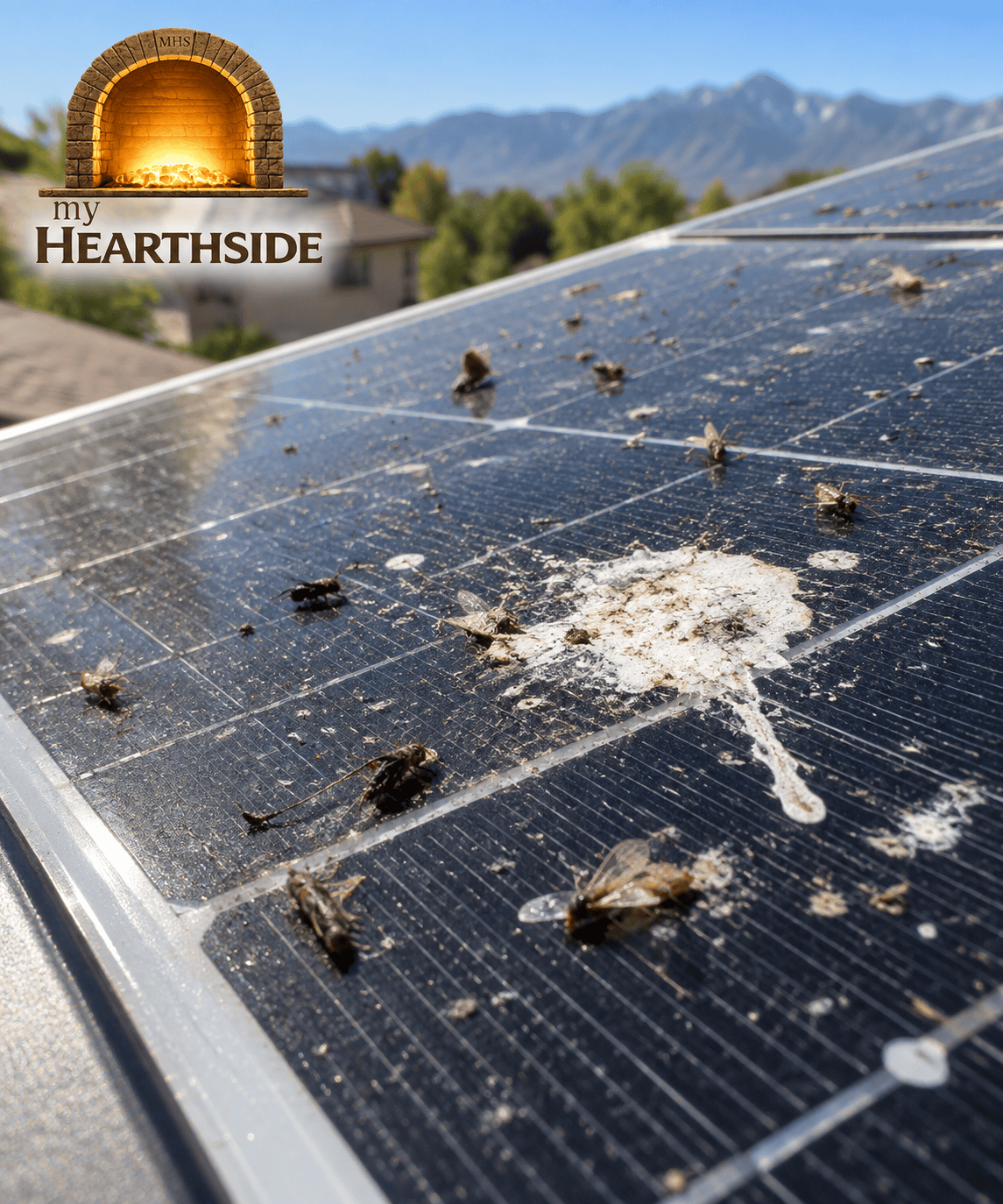
Dust settles as a thin, even layer that blocks a small, consistent amount of light. Bird droppings and dead bugs are different: they land as small, concentrated dark spots that block light almost completely in that one spot, while the rest of the panel keeps producing normally. That mismatch creates a hot spot: the shaded cell heats up while the surrounding cells keep working, which can stress the panel over time in addition to cutting output right now.
Research on panel soiling backs this up. The National Renewable Energy Laboratory notes that heavy soiling can cut output by 15 to 25 percent, and studies specifically on bird-dropping contamination have measured losses as high as 25 to 35 percent depending on coverage. On a recent job in Orem, panels that looked “just a little dusty” from the ground turned out to be covered in dead insects and bird droppings once I got up close.
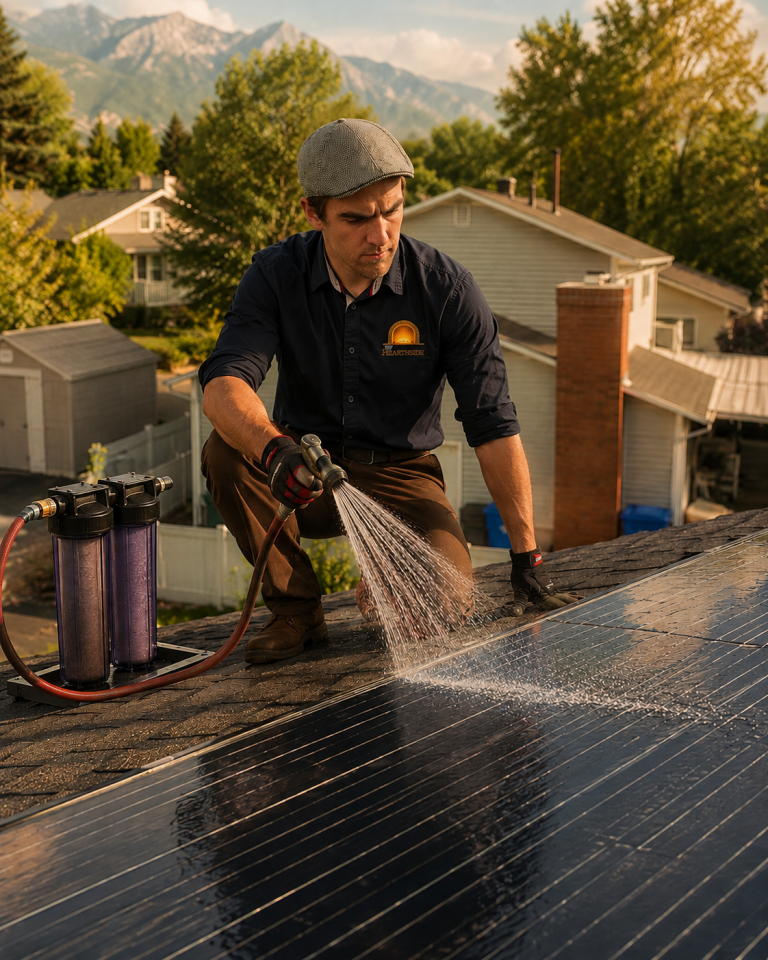
The fix isn’t a scrub brush or a squeegee, both can scratch the coating on the panel surface. A deionized water rinse strips minerals and grime without touching the surface with anything abrasive, leaving the panels spot-free once they dry.
With Utah getting over 220 sunny days a year, panels are one of the few things on a roof where dirty actually costs real money, not just curb appeal.
See Solar Panel Cleaning or head to Contact & Quote to get on the schedule.