Why I Only Install LED C9 Lights — And What It Actually Fixes
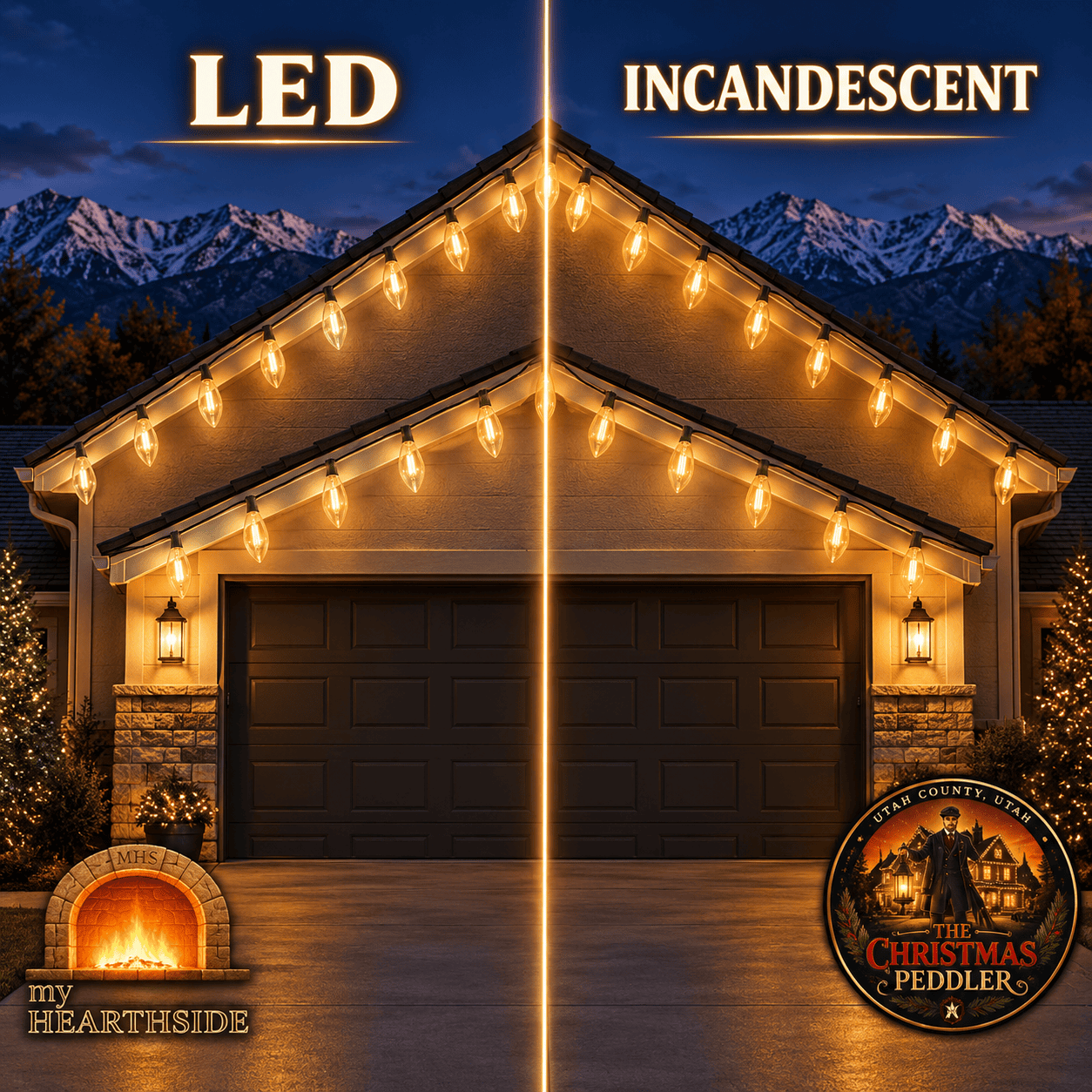
If you’ve ever had a strand of old-school incandescent Christmas lights, you probably remember the bulbs shattering: a strand brushes the concrete garage floor, touches a wall on the way down, and suddenly you’re sweeping up glass instead of hanging lights.
That used to be one of the most common service calls I got: “My bulb just blew up.” Real glass bulbs are fragile, and taking a line down at the end of the season was often when it happened.
Every strand I install now is LED, built with a reinforced plastic shell instead of glass, so that problem is gone. You still get to choose the look you want: an “incandescent look” bulb gives you that warm, classic glow, while a faceted bulb gives a more vibrant, modern sparkle. Same durability either way, no cracking, no exploding bulbs on the driveway.
The other thing that’s changed: energy use. According to the U.S. Department of Energy, LED holiday lights use about 90% less electricity than incandescent, with DOE estimating it costs roughly $0.27 to light a 6-foot tree for 12 hours a day over 40 days with LEDs, versus about $10 with old-style bulbs. With Utah electricity rates up over 15% this past year (Axios Salt Lake City, Aug. 2025), that gap matters more than it used to. Since switching customers to LED, I’ve never once had someone come back with a complaint about their power bill.
Bottom line: fewer broken bulbs, lower power costs, and you still pick the exact look you want.